“Capture everything” might be bad advice
One of the most common pieces of productivity advice is to capture everything.
Every task, idea, reminder, or random thought gets written down somewhere so you don’t have to keep it in your head. I used to do exactly that, and for a while it felt like the responsible thing to do.
Eventually, though, I realised I was mostly creating more work for future me.
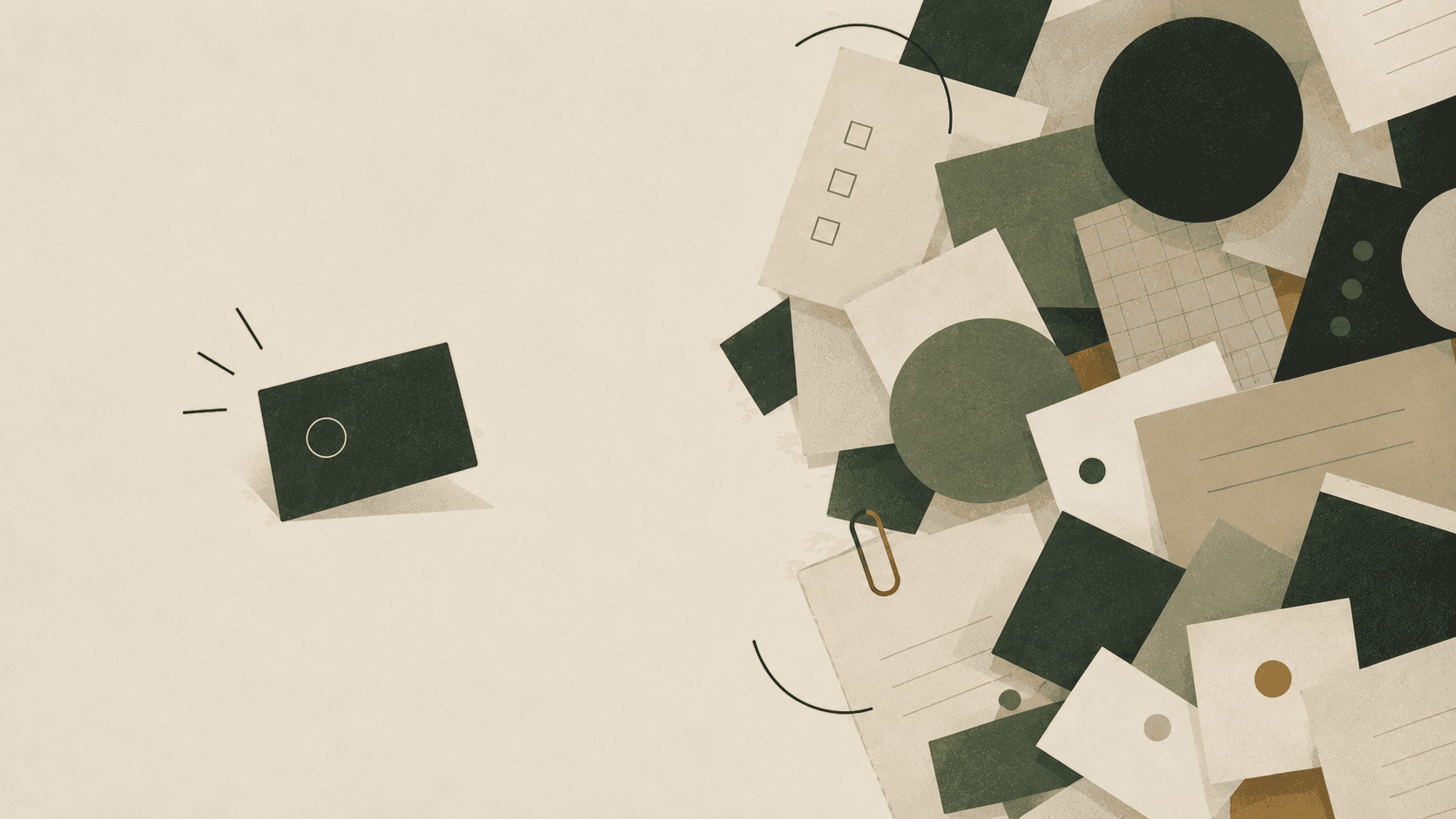
illustration created with ChatGPT
Every capture becomes something you have to deal with later
Writing something down gives you immediate relief. You don’t have to remember it anymore because your system will remember it for you.
But the task hasn’t disappeared. You’ve just moved it somewhere else.
The more I captured, the more my task managers filled up with things I meant to do, things I thought I should do, and ideas I cared about for roughly five minutes three weeks ago.
At some point, the list itself started feeling heavy. Instead of helping me remember what mattered, it became another collection of unfinished things waiting for my attention.
Capturing can become its own form of procrastination
I also noticed how easy it was to confuse capturing something with actually making progress on it.
Instead of replying to something, I could create a task to reply later. Instead of looking something up, I could save it. Instead of deciding whether an idea was actually worth pursuing, I could put it somewhere “for later.”
It feels productive because technically you did something.
But sometimes all I was really doing was handing the decision to future me.
And future me already had enough going on.
A little friction actually helps me
Most productivity tools try to make capturing as frictionless as possible. One shortcut, one tap, and whatever is in your head is safely stored.
I’ve started finding the opposite more useful.
I still want capturing to be easy, but not completely automatic. I want just enough friction that I have to decide whether something is actually worth saving.
Can I just do this now? Do I genuinely need to remember it? Am I realistically going to care about this later?
Sometimes the better option is to do it immediately. Sometimes I’ll trust myself to remember. And sometimes I’ll just let it disappear.
I’m becoming more comfortable with forgetting things
This was probably the strangest part for me.
A lot of productivity advice is built around the idea that nothing should ever fall through the cracks. A good system should hold everything so your brain doesn’t have to.
I’m not sure I need that anymore.
If something is genuinely important, there’s often another trigger for it: a deadline, a calendar event, a message, or someone asking me about it again.
And if an idea keeps coming back to me without being captured, that’s probably a decent sign that I actually care about it.
If I forget it completely, maybe it didn’t need to become another obligation in the first place.
I still capture things, just more intentionally
I’m definitely not trying to stop capturing altogether.
There are plenty of things I can’t deal with in the moment, and writing them down is still useful. I just try to reserve it for things I genuinely need to come back to, rather than automatically saving every thought that passes through my head.
Having fewer things captured makes the things that are there feel more important.
My lists feel lighter, I spend less time organising them, and there’s less pressure waiting for me every time I open my task manager.
Maybe I don’t need a system that remembers everything.
I just need one that remembers the things future me will actually need.